7-Day Body Confidence Reset Checklist (Daily, Simple Steps)

The Body Confidence Kickstart Checklist: A Simple Daily Reset for How You Feel in Your Body
Body confidence rarely shows up all at once—it’s built through repeatable, low-pressure actions that help the mind and body feel safer, stronger, and more supported. A checklist-style reset focuses on small daily wins: reducing appearance-driven spirals, strengthening self-talk, improving comfort in clothes and movement, and creating quick routines that make confidence easier to access.
What “kickstarting” body confidence actually means
Kickstarting body confidence isn’t about forcing yourself to feel amazing every day. It’s about building a skill set that makes it easier to return to steadiness when your mind starts scanning for problems.
- Confidence is a skill set: attention habits, self-talk, boundaries, and daily choices—more than a single feeling.
- Progress looks like faster recovery from bad body-image days, not the absence of them.
- A practical goal: feel more neutral, steady, and capable in your body across ordinary moments (work, errands, social plans, photos).
- The checklist mindset removes guesswork by turning confidence into doable steps.
Quick self-check: identify what’s draining confidence most
If body confidence feels “random,” it often isn’t. Patterns usually point to a few predictable drains.
- Mirror loops: repeated checking, pinching, or scanning for “flaws.”
- Comparison triggers: social feeds, old photos, certain people, or clothing brands/sizing.
- Comfort gaps: bras/underwear fit, shoes, fabrics, or outfits that require constant adjusting.
- Body neglect: too little sleep, hydration, movement, or meals that keep energy stable.
- Self-talk patterns: “I can’t wear that,” “I look awful,” “I need to fix myself before I do X.”
For a deeper overview of how body image can affect daily functioning, see the American Psychological Association (APA) body image resource.
The Body Confidence Kickstart Checklist: core pillars
- Body respect over body control: choose actions that support energy, comfort, and well-being rather than punishment.
- Environment design: adjust inputs (media, mirrors, clothing) so confidence requires less willpower.
- Micro-boundaries: limit conversations and content that turn bodies into a public project.
- Behavior-first confidence: act like a person who deserves comfort today—confidence often follows action.
- Tracking what works: brief check-ins to notice which habits reliably improve mood and presence.
7-day kickstart plan (repeat weekly as needed)
Keep each day short (10–20 minutes total). Choose one “body comfort” task and one “mindset” task daily, and if you miss a day, restart the next—no doubling up required.
7-Day Body Confidence Kickstart (mix-and-match checklist)
| Day | Body comfort action (5–10 min) | Mindset action (5–10 min) | Tiny win to note |
|---|---|---|---|
| 1 | Pick one outfit that feels good now; remove one “fussy” item from rotation | Write 3 neutral body statements (e.g., “My legs carry me”) | One moment of ease in clothing |
| 2 | Hydration + protein/fiber add-on to one meal | Unfollow/mute 5 comparison triggers | One less comparison spiral |
| 3 | 10-minute walk or gentle stretch focused on comfort | Practice a 30-second reset phrase before mirrors | More present during movement |
| 4 | Fit check: adjust bra/underwear/shoes; prioritize comfort sizing | Replace one self-criticism with a coping statement | Less adjusting, more focus |
| 5 | Plan one “confidence outfit” for an upcoming situation | Gratitude for function (sleep, digestion, strength, senses) | One social moment with less hiding |
| 6 | Create a “good-enough” grooming routine (5 steps max) | Boundary line for body talk (what to say, what to exit) | More control over conversations |
| 7 | Declutter one drawer section: keep what fits and supports you | Review: what helped most? choose 3 habits to repeat | A clear next-week plan |
Mirror, photo, and social situations: a fast confidence reset
- Name the trigger: “This is a comparison moment” reduces intensity and adds choice.
- Shift the target: focus on the event purpose (connection, work, fun) rather than appearance scoring.
- Use “neutral noticing”: identify one detail unrelated to the body (lighting, background, outfit color).
- Exit strategies: step away, change topic, or reduce exposure rather than forcing endurance.
- Aftercare: a brief grounding routine (water, fresh air, music, movement) to close the loop.
If intense appearance preoccupation is persistent and distressing, it can help to review clinical information on body dysmorphic disorder from the NHS.
Clothing and comfort: the fastest confidence lever
Make it stick: simple tracking without obsessing
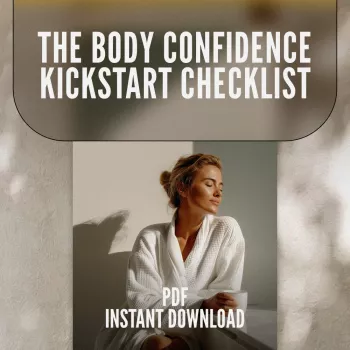
If you want a ready-to-use format that keeps decisions simple, try The Body Confidence Kickstart Checklist. For anyone who thrives on structured follow-through in other areas of life, From Dream to Done: The Ultimate Business Goal-Setting Checklist can also be a helpful companion for tracking small weekly commitments without overthinking them.
Printable support: when a checklist helps more than willpower
- A printable checklist keeps actions visible and reduces decision fatigue.
- Structured prompts can help when motivation is low or emotions run high.
- For a quick start, see The Body Confidence Kickstart Checklist (digital download).
For additional support and education around body image and eating disorders, the National Eating Disorders Association (NEDA) has resources that can be useful alongside habit-based tools.
FAQ
How fast can body confidence improve with a checklist approach?
Small improvements often show up within days—less spiraling, fewer comparison traps, and more comfort in clothes. Deeper confidence tends to build over weeks as habits repeat and triggers are reduced.
What if the checklist makes body image feel more intense?
Simplify to comfort-based actions only, avoid tracking appearance, and reduce mirror checking. If any step feels obsessive, pause it and consider professional support if distress is persistent.
Is body confidence the same as loving how you look?
No. Body confidence can look like body neutrality or body respect—feeling capable and worthy even when appearance satisfaction fluctuates.













Leave a comment