Mindful Knitting for Calm: A 7-Day Stress-Relief Reset
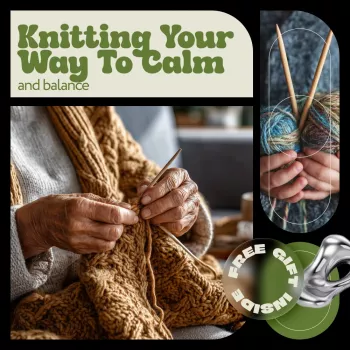
Knitting Your Way to Calm and Balance: A Mindful Practice for Everyday Ease
Mindful knitting blends gentle repetition, tactile comfort, and focused attention into a simple practice that can help downshift stress and support emotional steadiness. When the day feels loud—emails, errands, caregiving, decision fatigue—knitting offers something rare: a small, controllable rhythm you can return to on purpose. Over time, that rhythm can become a dependable “pause button” that helps the nervous system settle and the mind feel less scattered.
Stress can affect the body in real, measurable ways—sleep, digestion, muscle tension, and mood—so it helps to have practical tools that fit into real life. If you’d like deeper context on how stress shows up physically, the American Psychological Association provides a helpful overview here: Stress effects on the body.
Why knitting can feel calming
Knitting can be soothing for reasons that go beyond “staying busy.” The action itself naturally supports a steadier internal pace.
- Rhythm and repetition: steady stitches create a predictable pattern that can quiet mental noise and reduce the feeling of spinning thoughts.
- Hands-busy focus: attention shifts from racing worries to a single, manageable task you can complete one stitch at a time.
- Tactile grounding: yarn texture and needle movement provide sensory cues that help anchor attention in the present moment.
- Small wins: visible progress can support motivation and a sense of capability during stressful periods—especially when other parts of life feel uncertain.
Mindful knitting vs. “keeping busy”
It’s easy to knit while distracted—TV on, mind running, shoulders creeping up. Mindful knitting is different because the focus includes how you’re doing, not just what you’re making.
- Mindful knitting emphasizes noticing: breath, posture, hand tension, and emotional state while knitting.
- The goal isn’t speed or perfection: it’s steady attention and kinder self-talk during the process.
- Small sessions work: even 5–10 minutes can act as a transition between work, caregiving, or an evening wind-down routine.
- A helpful mantra: “One stitch at a time” can be a cue to return to the present when the mind wanders.
This approach overlaps with mindfulness practices commonly used to reduce stress. For an accessible explanation of mindfulness basics, the National Center for Complementary and Integrative Health offers a clear overview: Mindfulness.
A simple setup for calmer sessions
A soothing knitting habit is more likely to stick when it’s physically comfortable and easy to start. Think: fewer steps, fewer decisions, less friction.
- Choose comforting materials: a soft, non-splitting yarn and needles that feel stable in the hands can reduce irritation and rework.
- Create a small ritual: a consistent chair, a warm drink, or a 20-second stretch can signal “settle in” to the body.
- Reduce friction: keep a project bag with scissors, stitch markers, and a simple note (like “Row 12 next”) so starting feels effortless.
- Make it physically easy: support wrists, relax shoulders, and pause to shake out hands if tension rises.
If you already use meditation, mindful knitting can be a friendly alternative on days sitting still feels hard. The Mayo Clinic describes meditation as a fast, simple way to reduce stress—many of the same principles apply when you knit with attention: Meditation: A simple, fast way to reduce stress.
A 7-day mindful knitting reset (gentle and doable)
Consistency matters more than duration. Keep sessions short enough to feel welcoming, and use brief reflections to notice what changes.
| Day | Time | Practice cue | Reflection prompt |
|---|---|---|---|
| 1 | 5–10 min | Match breath to stitches for 10 breaths | What does calm feel like in the body today? |
| 2 | 10 min | Soften shoulders every 20 stitches | Where did tension show up? |
| 3 | 10–15 min | Name 3 sounds, 3 sensations while knitting | What helped attention return when it drifted? |
| 4 | 10–15 min | Knit slowly for 2 minutes, then normal pace | Did slowing down change mood or accuracy? |
| 5 | 15 min | Pause to stretch hands/wrists halfway through | What changed after the pause? |
| 6 | 15–20 min | Knit with a compassionate phrase (e.g., “steady and kind”) | How did self-talk affect the experience? |
| 7 | 15–20 min | End with 1 minute of stillness holding the finished fabric | What benefits are noticeable after a week? |
What to do when knitting becomes stressful
A guided option: Knitting Your Way to Calm and Balance (mindful knitting eBook)
If you like the idea of mindful knitting but want a clear structure to follow, a guided resource can make the habit easier to start and sustain. Knitting Your Way to Calm and Balance – A Mindful Knitting eBook for Stress Relief, Emotional Wellness, and Everyday Calm is designed around stress relief and emotional wellness through structured, calming knitting practices.
If stress relief is part of a bigger “life reset,” pairing a calming habit with a light planning routine can also help reduce mental clutter. From Dream to Done: The Ultimate Business Goal-Setting Checklist can be a practical companion for turning swirling thoughts into a short, realistic next step—then returning to knitting with a clearer mind.
Making the habit stick without pressure
FAQ
Do you need to be good at knitting for it to be calming?
No—simple stitches and easy patterns are often the most calming because they support rhythm without demanding intense concentration. A basic scarf, dishcloth, or a small swatch can be enough to get the soothing benefits.
How long should a mindful knitting session be to help with stress?
Start with 5–10 minutes so it feels easy to repeat. Short sessions can work well as transitions in the day, and you can extend the time gradually if it stays enjoyable.
What if knitting mistakes make anxiety worse?
Switch to an easier project, add stitch markers to reduce mental load, and pause for a few slow breaths before continuing. Mistakes are normal; giving yourself permission to stop and come back later often helps the most.















Leave a comment