Dish Checklist Routine: 10-Minute System That Sticks
Dish Duty Done Right: A Simple Checklist System That Makes Dishes Happen
A sink full of dishes is rarely a “time” problem—more often it’s a friction problem. When the steps feel blurry and endless, starting takes more energy than the washing itself. A small, visible checklist reduces decision fatigue, creates a clear start/finish line, and turns dishwashing into a quick, repeatable routine that’s easier to begin and satisfying to complete.
Why dishes stall: friction, not laziness
Most kitchens don’t need a stricter attitude; they need a simpler path. Dishes stall when the brain has to improvise the process every single time.
- Invisible steps feel bigger: sorting, scraping, soaking, loading, wiping, and resetting the sink blur together and start to feel infinite.
- Decision fatigue shows up as avoidance: choosing where to start (cups? pans? plastics?) becomes its own barrier.
- No finish line = no momentum: without a clear definition of “done,” the task never feels complete, so it’s hard to get the satisfaction that makes you repeat it.
- A checklist works because it makes the first step obvious: and the last step rewarding—two key moments that often determine whether the task happens at all.
This is also where confidence matters. A clear routine can increase the feeling that you can handle the task—similar to the concept of self-efficacy (the belief that you can succeed at a specific behavior).
The checklist method: turn one big chore into tiny wins
A dish checklist isn’t about doing more. It’s about doing less thinking. The goal is to make the process so predictable that starting feels almost automatic.
- Start with the same “opening move” every time: clear counter space, empty sink, quick sort. Repetition shrinks the mental load.
- Keep steps under two minutes: small steps create fast completions, and fast completions create momentum.
- Build in a minimum viable clean option: for low-energy days (load only, run dishwasher, wipe sink). Consistency beats heroic resets.
- Add one reward cue: a specific podcast, a cozy drink, or one playlist that only plays during dish duty. Pairing behavior with a cue is a core habit-building idea popularized in resources like Atomic Habits.
Common dishwashing blockers and a checklist fix
| Blocker | What it looks like | Checklist step that fixes it |
|---|---|---|
| Not knowing where to start | Standing at the sink scrolling or pacing | Step 1: Clear a 12-inch work zone + Step 2: Quick sort (trash, recycling, soak) |
| Pans feel overwhelming | One greasy skillet stops everything | Soak pan immediately (hot water + soap) and move to easy items first |
| Dishwasher already has clean dishes | Avoiding unloading so nothing can be loaded | Unload first; it takes less time than handwashing a full sink |
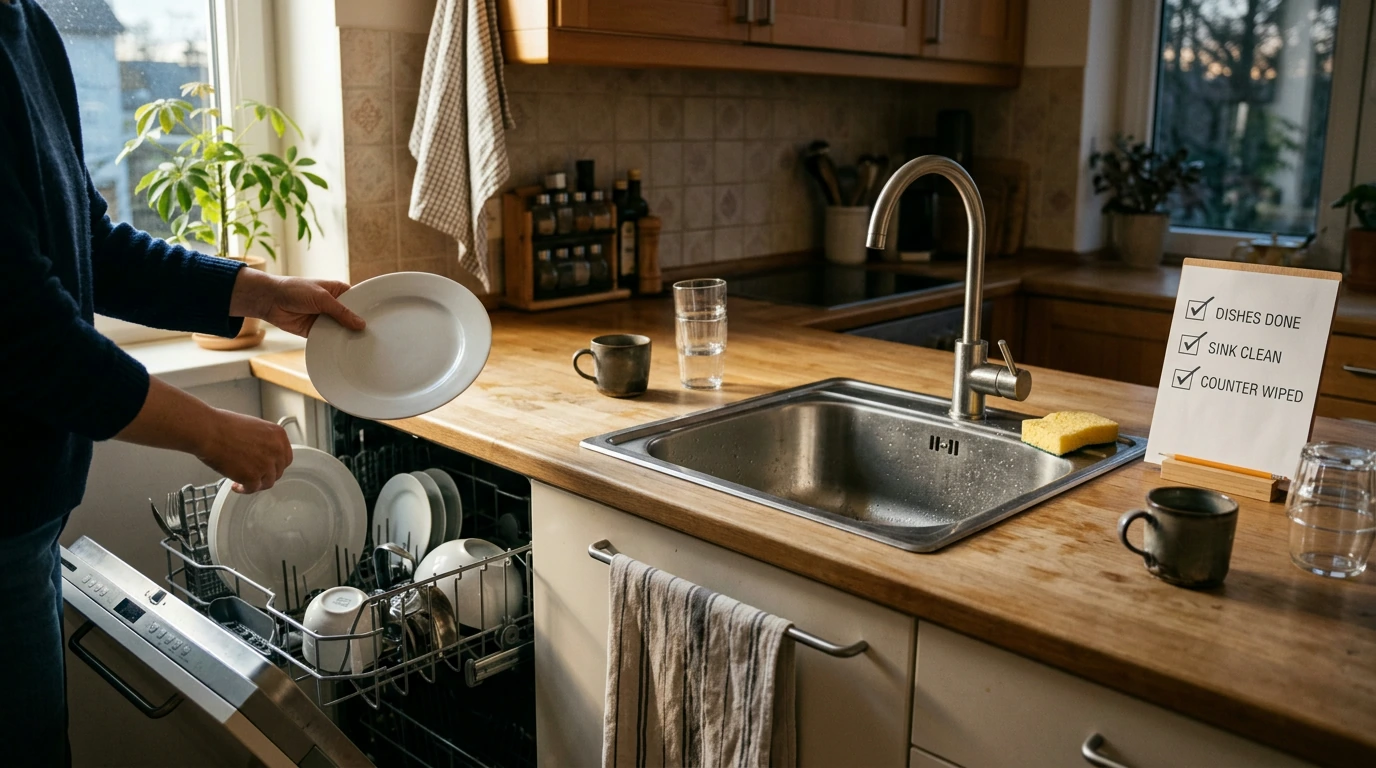
| “It never ends” feeling | Cleaning but the kitchen still looks messy | Final step: Reset (wipe sink, wipe counter, put sponge away) |
A realistic daily routine (10 minutes or less)
If dish pileups keep happening, the fix usually isn’t a bigger cleaning day—it’s smaller touchpoints. Two short sessions beat one marathon because they prevent the “critical mass” that makes everything feel impossible.
- Two touchpoints: a quick post-meal reset plus a short evening closeout keeps the sink from turning into a project.
- Use a 10-minute cap: set a timer and stop when it ends. The point is to show up daily, not to achieve showroom perfection.
- Suggested flow: unload dishwasher (if needed) → load dishes → handwash remaining → wipe sink/counters → run dishwasher (or set a soak).
- If time runs out: stop at “clean enough”: no food scraps, sink drained, counters cleared.
When life is overloaded, motivation drops and chores can feel heavier than they “should.” If that’s a recurring theme, it can help to recognize broader strain and fatigue patterns; the Harvard Business Review overview of burnout is a useful lens for why even small tasks can feel harder during high-stress seasons.
Make the kitchen support the habit (small environment tweaks)
The environment should make the right action the easy action. If dishwashing requires “setup steps,” it’s easy to delay.
Printable tool spotlight: “Dish Duty Done Right” checklist
If the hardest part is starting, a visible, reusable list can remove the “what now?” moment. The Dish Duty Done Right printable checklist is designed to reduce mental load by turning dishwashing into a repeatable sequence—especially helpful when energy is low or the day has been long.
If checklists help in one area, they often help elsewhere, too. For planning and follow-through beyond the kitchen, the From Dream to Done business goal-setting checklist offers a similarly structured, step-by-step approach. And if “life admin” is part of what’s draining the tank, Budget Like a Redditor can help simplify money routines so small chores don’t feel like the final straw.
Troubleshooting: when motivation is low or the sink is already overflowing
FAQ
How can a checklist actually motivate someone to wash dishes?
Motivation often follows action, not the other way around. A checklist lowers the activation energy by removing decisions, creating quick wins, and giving a clear finish line that makes “done” feel real.
What if there isn’t time to do all the steps?
Use the minimum version: load what you can, run the dishwasher (or start a soak), and wipe the sink. A timer helps keep it consistent—“some, daily” prevents the pileup that steals more time later.
How should the checklist be used in a shared household?
Assign simple roles (unload vs. load vs. wipe/reset) or rotate days, then keep the checklist posted where everyone sees it. Agree on a shared definition of “done” (especially the reset step) so the handoff feels fair.















Leave a comment