Athletic Build Style Guide: Flattering Outfit Checklist
Flattering Styles for an Athletic Build: An Easy Style Checklist
An athletic build often comes with strong shoulders, a straighter waist, and defined legs and arms. The most flattering outfits usually balance proportions, add gentle shape where desired, and highlight structure without looking boxy. Use this checklist-style guide to build outfits that feel polished, comfortable, and intentional.
Athletic build traits to dress for (and why they matter)
Athletic body types are beautifully versatile, but certain fit details can make outfits look sharper and more “finished” with less effort.
- Common features: broader or defined shoulders, a straighter waist, athletic hips, toned legs/arms.
- Style goal options: emphasize shoulders and length, create a more defined waist, soften angular lines, or lean into a sleek sporty silhouette.
- Fit principle: choose clothes that follow the body (skimming) rather than cling tightly or hang straight like a rectangle.
- Balance principle: if the top is structured, consider softer volume on the bottom (and vice versa).
Fabric choice matters as much as cut. Materials with natural drape and resilience tend to look more refined and move better—especially in knits and tailored pieces. For a deeper look at textiles and performance, the International Wool Textile Organisation is a helpful reference.
The easy checklist: what to look for when shopping
- Necklines that flatter: V-neck, scoop, square, wrap, soft boat neck (avoid extremely high crew necks if the chest/shoulders feel visually “wider” than desired).
- Sleeves that refine the shoulder line: raglan, flutter, cap sleeves with structure, or set-in sleeves with a clean shoulder seam (avoid tight sleeves that cut into the bicep).
- Waist definition: wrap styles, belting, shaped seams (princess seams), peplum (subtle), and high-rise bottoms.
- Fabrics with drape: matte jersey, viscose, lightweight knits, crepe, soft denim—enough structure to hold shape but not stiff like cardboard.
- Patterns and color placement: darker/solid on the area you want to visually minimize; prints/texture where you want to draw attention.
- Tailoring checkpoint: shoulder seam sits at the shoulder bone; no pulling across the back; pants sit smoothly at the hip without whiskering.
Outfit formulas that flatter an athletic build
| Style goal | Top | Bottom | Layer | Shoes/finish |
|---|---|---|---|---|
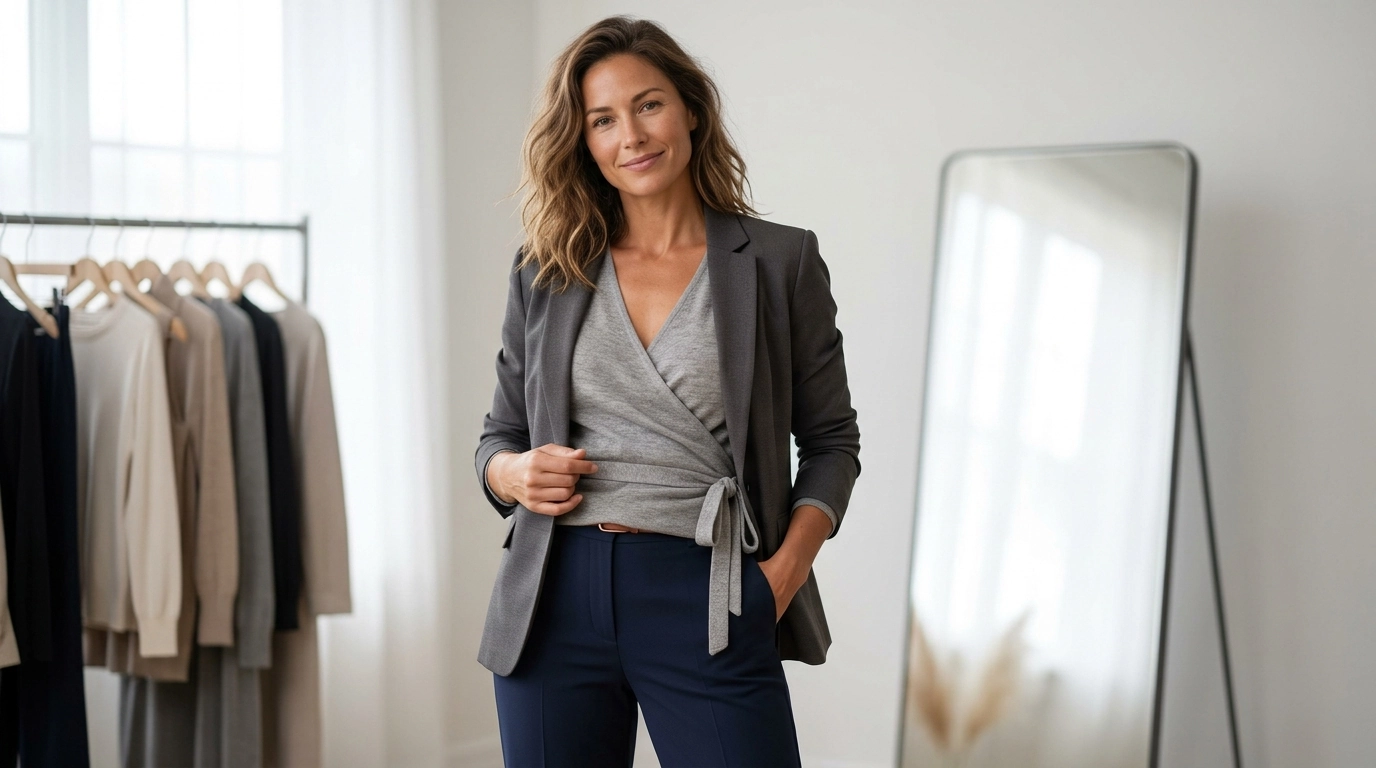
| Create a defined waist | Wrap top or fitted knit | High-rise straight or wide-leg | Cropped jacket or belted blazer | Pointed-toe flats/heels; structured bag |
| Soften shoulders | V-neck blouse with drape | A-line skirt or fluid trouser | Longline cardigan | Low-contrast shoes to elongate |
| Highlight athletic shape | Clean tank or crew tee (not tight) | Slim straight jeans | Modern bomber or denim jacket | Sneakers or ankle boots |
| Add curves visually | Peplum or ruched top | Bootcut or flared jeans | Single-button blazer | Heeled booties; statement belt |
Tops that tend to look best
- Wrap tops and wrap dresses: instant waist definition and a flattering neckline.
- Button-downs: choose slightly shaped or size for shoulders, then tailor the waist; look for stretch poplin.
- Knits: ribbed or fine-gauge knits skim and highlight tone without bulk.
- Cropped lengths: pair with high-rise bottoms to create longer legs and a defined waist.
- Avoid-or-adjust: very boxy tees; if wearing oversized, balance with a fitted bottom and add a front tuck.
Fashion constantly cycles through proportions (cropped, oversized, tailored, relaxed). If you like a trend, focus on adapting the proportions—that’s often the difference between “stylish” and “shapeless.” For general context on how fashion evolves, see Encyclopaedia Britannica: Fashion.
Bottoms that balance and elongate
- High-rise jeans and trousers: define the waistline and lengthen the leg line.
- Straight-leg and slim-straight: streamlined but not clingy; easy to style with structured or drapey tops.
- Wide-leg trousers: flattering when the waist fits well; pair with a tucked or cropped top.
- Skirts: A-line, bias-cut, or gently flared silhouettes add softness and shape.
- Shorts: mid-thigh or tailored bermuda styles can look especially polished on athletic legs.
Jackets and layers that create shape
- Blazers: single-button or softly tailored styles define the waist; watch shoulder padding (choose minimal unless enhancing structure is the goal).
- Cropped jackets: emphasize the waist when worn over high-rise bottoms.
- Longline layers: cardigans or coats create vertical lines; add a belt if you want more shape.
- Trench coats: a classic athletic-build win—adjustable waist and strong lines.
- Denim jackets: look for a slightly cropped fit and a clean shoulder seam.
Dress silhouettes that work for day and night
Quick “avoid vs. adjust” guide (so nothing feels off)
A printable checklist to keep while shopping
Helpful downloads (in stock)
- Flattering Styles for an Athletic Build – Easy Style Checklist | what clothes flatter athletic build Guide (Digital download)
- From Dream to Done: The Ultimate Business Goal-Setting Checklist | Printable PDF for Setting Business Goals
- Budget Like a Redditor: Real-Talk, Real Results | How to Budget Reddit-Style Guide
FAQ
What clothes flatter an athletic build the most?
Look for skimming fits, waist definition (wraps, belts, shaped seams), and balanced proportions (structured top with a softer bottom, or the reverse). High-rise bottoms and V/scoop/square necklines are often the fastest upgrades.
How can an athletic build look more hourglass in everyday outfits?
Add gentle volume below the waist with A-line skirts or wide-leg trousers, and define the waist with belts, wrap styles, or cropped layers. Avoid pairing two boxy pieces at once so your shape doesn’t get visually “flattened.”
Are oversized trends flattering on an athletic body type?
Yes—keep one piece oversized and the other more fitted, then add a tuck or belt to restore shape. Drapey fabrics help oversized silhouettes look intentional rather than bulky.










Leave a comment