78mm Cold Press Juicer: A Simple Fresh-Juice Routine
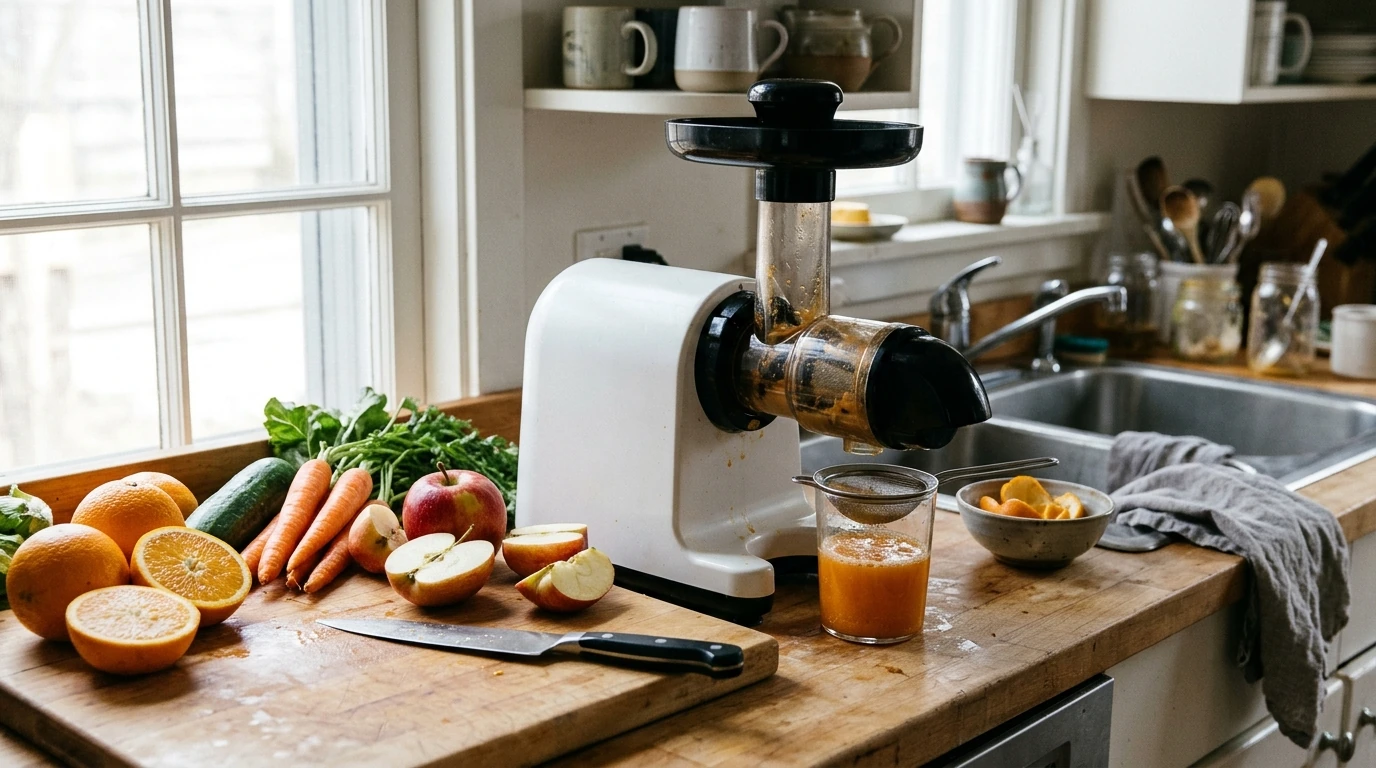
Fresh juice is easier to make a habit when the preparation fits your morning. Our 78mm-feed-chute, 200W slow masticating juicer offers room for some produce to go in with less chopping, but a wider opening does not eliminate washing, trimming, or cutting. A simple routine is to choose a few ingredients, prep what needs attention, and feed them at a steady pace. For more guidance, see Kuvings Whole Slow Juicer B6000W Review.
What the 78mm feed chute changes
The Cold Press Juicer 78mm Feed Chute 200W Slow Masticating Juice Extractor for Whole Fruits has a wider opening that can save you some cutting when produce fits comfortably. It is not a promise that every apple, cucumber, or other fruit will fit whole. Size and shape vary, and firm or irregular pieces may be easier to handle after you cut them. For further reading, see Cold Press Juicer Machines with Built-in Blades for Slicing ….
Think of the 200W slow masticating extractor as a choice for a measured juicing routine: prepare ingredients, add them gradually, and let the machine work without forcing produce through the chute. To get started, try familiar pairings such as apple and carrot or cucumber and citrus. You can change the proportions once you know which flavors you enjoy.
A practical guide to prepping produce
Start by washing fruits and vegetables under running water, even when you plan to peel them. The FDA’s produce-safety guidance recommends washing produce before cutting it so dirt and bacteria on the surface are less likely to transfer inward. Soap and produce wash are unnecessary. Scrub firm produce with a clean produce brush, and dry it with a clean towel or paper towel if you want a less slippery surface for cutting.
Next, remove parts you do not intend to juice, such as tough stems, inedible peels, or damaged areas. Cut anything too large for the opening into pieces that drop in comfortably. If a piece catches, stop and make it smaller rather than pushing harder. Feeding produce gradually keeps the process more manageable than trying to load everything at once.
Quick prep decisions before juicing
| Produce | Before it goes in | Routine tip |
|---|---|---|
| Apples | Wash; cut if they do not fit comfortably | Alternate pieces with other ingredients |
| Carrots | Wash and trim; cut thick pieces as needed | Feed gradually |
| Cucumbers | Wash; cut if too wide | Pair with stronger-flavored produce |
| Citrus | Wash before peeling; remove peel and seeds as needed | Add a little at a time and taste |
A wide chute can shorten one part of prep, especially with smaller produce. Thoughtful cutting still matters: pieces that fit without pressure are simpler to feed, and having everything ready before you switch on the juicer lets you focus on making the glass.
Make a glass you’ll want to repeat
Begin with two or three ingredients and make a small batch. For example, use apple for sweetness, carrot for a familiar vegetable flavor, and a little citrus for tartness. Or start with mild cucumber and add citrus a bit at a time. Taste before adding more. It is easier to adjust a small glass than to find you have made a pitcher that is too sweet or too sharp for you.
Keep your usual portions in mind when buying produce, too. If you are experimenting, a few pieces of each ingredient may be more useful than a large assortment you cannot finish. When you want a broader plan for everyday purchases, our Smart Moves: Save Money & Pay Bills Like a Pro guide offers a separate starting point for thinking about your budget.
Make about as much juice as you expect to enjoy promptly, and refrigerate leftovers. Juice can complement the fruits and vegetables you eat, but it should not take the place of whole fruit. USDA MyPlate’s Fruit Group guidance encourages choosing whole fruit often; whole fruit provides fiber that juice does not offer in the same way.
Make room for cleanup
Before you begin, clear enough counter space for washed produce, a serving glass, and a container or spot for pulp. Keeping a cutting board nearby makes it easy to resize an ingredient that turns out to be too wide. This small setup step can prevent a pause in the middle of juicing while you search for a bowl or make room for another apple.
After use, clean food-contact parts according to the product instructions. Dealing with pulp and residue as part of the routine, rather than leaving them for your next session, helps make the next glass easier to start. We recommend allowing time for both prep and cleanup when you decide whether juicing fits a weekday morning or works better at another point in your day.
If a 78mm opening and a steady-feed approach suit the way you like to prepare produce, our team invites you to explore the cold press juicer linked above. The most useful routine is one you can repeat with ingredients you enjoy and an amount of prep you are comfortable doing.
FAQ
Can every fruit go into the 78mm feed chute whole?
No. Wash produce first, then cut anything that does not fit comfortably, including large or irregular pieces. Never force ingredients into the opening.
Do I need to wash fruit if I plan to peel it?
Yes. FDA guidance recommends washing produce before peeling or cutting so dirt and bacteria on the surface are less likely to transfer inward.
Can fresh juice replace whole fruit?
Juice can be part of a varied diet, but it does not provide fiber in the same way whole fruit does. USDA MyPlate recommends choosing whole fruit often.















Leave a comment