Stop Snoring: Natural Fixes, Devices, and a 14-Day Plan
A Practical Guide to Snoring Solutions: Natural Remedies, Devices, and Sleep Tips
Snoring usually happens when airflow is partially blocked during sleep, causing soft tissues in the nose and throat to vibrate. For some people it’s occasional and harmless; for others it’s frequent, loud, and tied to poor sleep quality or possible breathing disorders. The most effective approach is to match the solution to the likely cause—sleep position, nasal congestion, alcohol, weight, mouth breathing, or airway anatomy—then track what actually changes the sound and sleep quality over 2–3 weeks.
Why Snoring Happens (and What It Can Signal)
As you fall asleep, throat muscles relax. When the airway narrows, airflow speeds up and creates vibration in the soft palate, uvula, tongue base, or nasal tissues—what you hear as snoring. Several common factors increase airway resistance: sleeping on your back, nasal blockage (allergies, colds, deviated septum), alcohol or sedatives, smoking, reflux, and excess weight around the neck.
Snoring can also coexist with obstructive sleep apnea (OSA), a condition where breathing repeatedly pauses or becomes very shallow during sleep. Warning signs include choking or gasping, witnessed pauses in breathing, morning headaches, and significant daytime sleepiness. If those symptoms show up, prioritize screening rather than relying on home fixes. For medical overviews, see the American Academy of Sleep Medicine and the National Heart, Lung, and Blood Institute.
Kids who snore regularly also deserve attention, since enlarged tonsils/adenoids or other airway issues can be involved.
Quick Self-Check: Patterns That Point to the Cause
A few simple clues can point you toward the most effective first step. The goal isn’t to “try everything,” but to run small, controlled experiments so you can keep what helps and drop what doesn’t.
| Clue | What it often means | First steps to try |
|---|---|---|
| Snoring mainly on the back | Airway narrows with gravity | Side-sleeping supports; pillow setup; positional training |
| Stuffy nose or seasonal snoring | Congestion/inflammation | Saline rinse; allergy control; humidification; nasal strips |
| Dry mouth, open-mouth sleep | Mouth breathing or tongue position | Nasal breathing support; chin strap; oral exercises |
| Snoring after alcohol | Extra muscle relaxation, more collapse | Avoid alcohol 3–4 hours before bed; reduce sedatives (with clinician guidance) |
| Pauses, gasping, heavy daytime sleepiness | Possible sleep apnea | Seek evaluation; consider sleep study |
If your snoring seems tied to congestion, daytime allergies, or a cold, the “nose-first” approach often beats mouth-focused devices. If it’s back-only, positional changes can make a surprisingly fast difference. If it’s loud, chronic, and paired with fatigue, it’s time to take OSA seriously; the Mayo Clinic’s snoring overview is a helpful starting point for risk factors and when to seek care.
Natural Snoring Remedies That Often Help Within 2 Weeks
1) Side-sleeping (positional snoring fix)
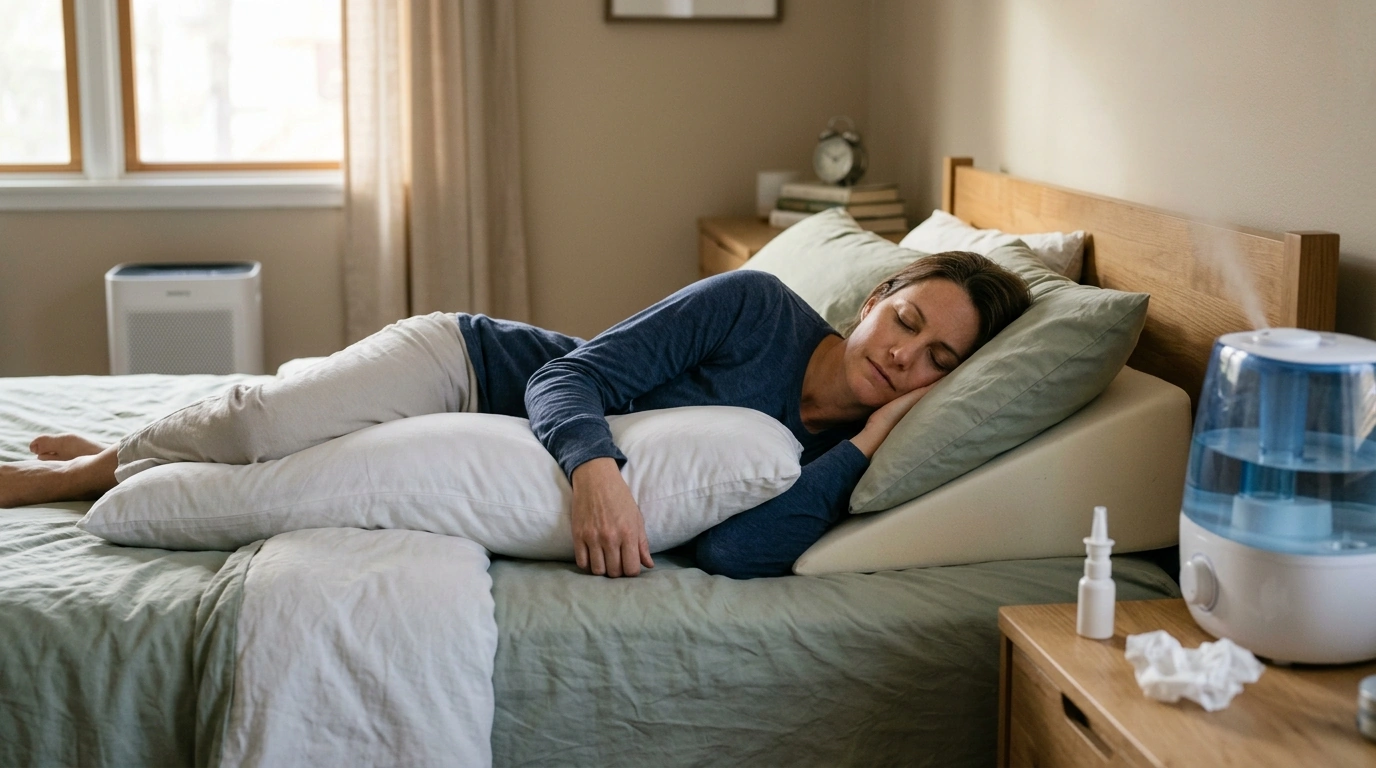
If snoring is worse on your back, make side-sleeping easier rather than relying on willpower. Try a body pillow to keep you angled, a wedge pillow to elevate the upper body, or a simple “backpack/tennis-ball” method to reduce back-sleep time.
2) Nasal hygiene and allergy control
Clear nasal passages before bed with saline spray or a gentle rinse. If allergies are likely, stack small improvements: wash bedding regularly, reduce dust buildup, consider a HEPA filter, and keep pets out of the bedroom if they trigger symptoms.
3) Humidity and hydration
Dry air can irritate tissues and amplify vibration. A cool-mist humidifier may reduce throat dryness, especially in winter or in air-conditioned rooms. Consistent hydration during the day also supports mucosal comfort (without chugging water right before bed).
4) Alcohol timing and late heavy meals
Alcohol relaxes airway muscles and can increase collapse. Aim to stop alcohol 3–4 hours before sleep. Heavy late meals may worsen reflux and airway swelling; a lighter dinner and earlier timing is often an easy win.
5) Weight management (when relevant)
When extra weight contributes to airway narrowing, even modest changes can help. Focus on sustainable habits—regular movement, steady sleep timing, and consistent meals—rather than rapid loss that’s hard to maintain.
Exercises and Habits That Support the Airway
Oropharyngeal exercises (mouth and throat exercises) can reduce snoring for some people by improving muscle tone and tongue posture. Think of it as “physical therapy” for the airway: not instant, but potentially meaningful when done daily.
Anti-Snoring Devices: What They Do and Who They Fit
A Simple 14-Day Plan to Test What Works
When to Get Medical Help
Digital Tools and Downloads
If you prefer a structured, printable-friendly approach for testing changes without guessing, A Practical Guide to Snoring Solutions (Digital eBook Download) organizes the process with checklists for triggers (alcohol, congestion, reflux), weekly tracking templates, and practical device comparisons—so you can pick the most likely cause, run a short experiment, and keep only what improves results.
For anyone building new routines (sleep schedule consistency, habit tracking, or planning a two-week reset), a simple checklist can help with follow-through: From Dream to Done: The Ultimate Business Goal-Setting Checklist (Printable PDF).
FAQ
What is the fastest natural way to reduce snoring?
Start with side-sleeping and nasal clearing (saline rinse plus allergy control if needed). Avoid alcohol within 3–4 hours of bedtime and track results for 7–14 nights to confirm the change is real.
Do anti-snoring mouthguards work for everyone?
No—mouthguards help most when snoring is driven by airway collapse behind the tongue, and comfort/fit are major factors. If you have TMJ pain, dental concerns, or possible sleep apnea, professional guidance is a safer next step.
When is snoring a sign of sleep apnea?
Red flags include breathing pauses, gasping/choking, loud chronic snoring, morning headaches, and significant daytime sleepiness. A sleep study is the most reliable way to confirm.
















Leave a comment