Coding for Beginners: Your Guide to Starting from Scratch

Coding can feel like a whole new world, but you don’t have to understand everything before you begin. A small idea, a little patience, and regular practice are enough to get started. Whether you want to make a website or simplify a routine task, learning to give a computer clear instructions can open up new possibilities.
Our beginner programming eBook offers a starting point for exploring coding from scratch. You can pair a beginner-friendly guide with small experiments and let your interests shape what you learn next.
What Does Learning to Code Involve?
Programming is the process of writing instructions that a computer can follow. Those instructions might tell a webpage what to display, help organize information, or automate a task you would otherwise repeat by hand. A program can be simple or complex, but it starts with breaking a goal into smaller steps.
For example, you might want to build a personal webpage with a short introduction and links to your favorite projects. Or you might want a script that helps you rename a group of files. Both goals give you a practical reason to explore how code works.
You don’t need to get everything right on the first try. Experimenting, making mistakes, and trying again are part of learning. With practice and patience, unfamiliar terms and instructions can become easier to understand.
Meet the Coding for Beginners eBook
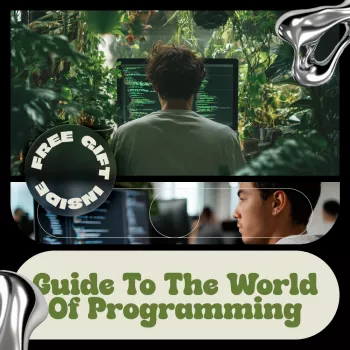
We offer A Beginner’s Guide to the World of Programming eBook as a step-by-step starting point for people who are new to coding. It is currently in stock and listed at $14.99.
If you’re looking for a guide to help you begin exploring programming, visit the product page to learn more. You can then decide how it fits alongside your own goals and practice routine.
A Simple Path from Curiosity to Practice
Before choosing a language or resource, pick a small goal that interests you. A simple webpage, a basic calculator, or a short script gives your learning a direction. You can always change that goal as you discover what you enjoy.
Short, regular sessions can be more manageable than waiting for an entire afternoon to study. During each session, focus on one idea and give yourself time to try it. Even when an example doesn’t work as expected, investigating why can help you build confidence.
| Step | Action | Purpose |
|---|---|---|
| Choose a goal | Pick a small task that interests you | Give your learning direction |
| Learn a concept | Study one basic idea at a time | Build a foundation |
| Try it out | Write and run a short example | Connect the idea to practice |
| Adjust and repeat | Change the example and troubleshoot | Develop problem-solving habits |
When something goes wrong, read the error message rather than treating it as a dead end. Look for clues about where the problem occurred, make one change, and try again. If a concept still feels confusing, revisit it later with a fresh example.
Choose a Direction That Interests You
Web development is one possible starting direction if you want to create pages people can view in a browser. HTML structures web content, while JavaScript can add interactivity, such as responding when someone clicks a button. HTML is a markup language rather than a programming language, but it is useful to understand when building for the web.
General-purpose programming is another path. Python, for example, can be used for many tasks, including working with data and automating routine processes. JavaScript is also an option if your goal centers on interactive websites. You don’t have to master both at once; choose the direction that makes your first project feel approachable.
When you’re ready to practice, free documentation can complement a beginner-friendly guide. Explore MDN’s Learn Web Development resources for web topics, or visit Python for Beginners for an introduction to getting started with Python.
Make Your Next Step Manageable
Set a modest weekly goal that fits your schedule. You might plan two short sessions: one to explore a concept and another to use it in a small example. Keep notes on questions, error messages, and ideas you want to revisit. Those notes can make it easier to pick up where you left off.
Choose a project that reflects your interests instead of rushing toward an advanced result. A page about a hobby or a simple tool for organizing a list gives you room to practice without taking on too much at once. As you learn, add one improvement at a time.
If you also want a separate planning tool for business-related goals, our From Dream to Done business goal-setting checklist is in stock. It’s a planning resource rather than a coding guide, and may be useful if your project is part of a broader business idea.
Ready to take the first step? Explore our beginner programming eBook on its product page and choose a small goal you’re excited to try.
FAQ
Do I need coding experience to start learning?
No prior coding experience is needed. Start with basic concepts and build your understanding through practice.
Which programming language should a beginner learn first?
Your best starting point depends on your goal. Python is an option for a variety of tasks, while JavaScript is useful for interactive web development.
How often should a beginner practice coding?
Choose a regular schedule you can maintain, even if each session is short. Consistency can be more manageable than occasional long sessions.















Leave a comment