Silicone Fruit & Veggie Feeder Pacifier: Safe First Tastes
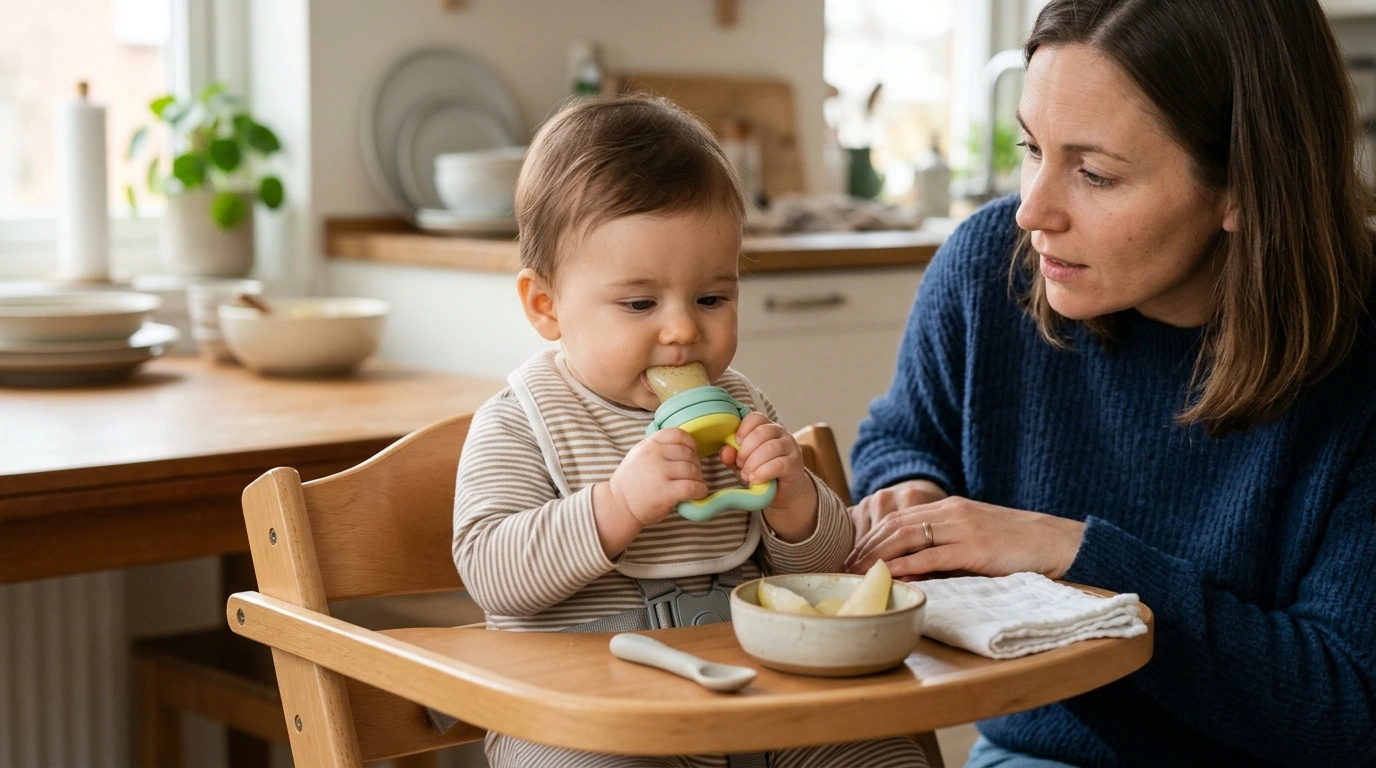
Baby Silicone Fruit & Vegetable Feeder Pacifier: A Simple Way to Explore First Flavors
Starting solids can feel like a big leap—new textures, new tastes, and a whole new set of safety questions. A baby silicone fruit & vegetable feeder pacifier helps your baby explore fresh foods in a controlled way by keeping pieces contained while letting flavor and soft puree come through. Our team put together this practical guide to help you use one day-to-day, choose baby-friendly fillings, and keep it clean and ready for the next snack break.
What a fruit & veggie feeder pacifier does (and what it doesn’t)
A feeder pacifier is designed to make early taste exploration simpler. You place soft food into the silicone pouch, close it securely, and let your baby suck, mouth, and chew on the feeder while staying upright and supervised.
- Holds soft food inside a silicone pouch so your baby can taste without handling slippery chunks.
- Supports early exposure to fruits and vegetables once your baby shows readiness for complementary foods.
- Works well with chilled options (like cold fruit) for a soothing snack-and-comfort routine.
- Not a substitute for supervision: your baby still needs an attentive adult during any feeding.
- Not a guarantee against choking—safe food prep and age-appropriate choices still matter.
If you’re unsure when to start solids, the CDC and the American Academy of Pediatrics offer clear readiness guidance you can review with your pediatrician: CDC: When to Introduce Solid Foods and AAP: Starting Solid Foods.
Why silicone feeders are a parent favorite for early self-feeding
Many families like silicone feeders because they’re simple, familiar, and a bit less chaotic than handing over slippery pieces of produce.
- Easy grip and easy offer: the pacifier-style shape can feel familiar if your baby already uses a pacifier.
- Mess control: more flavor gets into your baby, and less ends up in hair, seat straps, and on the floor.
- Portion control: a small piece of fruit or veggie can last longer because your baby extracts juices gradually.
- Texture stepping-stone: helps bridge the gap between milk feeds and more textured finger foods.
- Simple routine: fill, close, hand to your baby, supervise, then wash—repeat as needed.
What to put inside: gentle starter ideas (and what to avoid)
Start with foods that soften easily and keep early exposures simple—especially at the beginning when you’re learning how your baby responds to new flavors.
- Choose foods that soften easily: ripe banana, steamed apple or pear slices, avocado, very soft mango, well-cooked carrot, or sweet potato.
- Chill for comfort: cold cucumber (peeled), chilled pear, or a small piece of seedless watermelon can feel soothing—just make sure pieces fit fully inside the pouch.
- Skip hard, dry, or crumbly foods that don’t soften: nuts, raw hard apple, popcorn, crackers.
- Avoid added sugar and honey for babies under 12 months; keep flavors simple and single-ingredient when starting out.
- Watch acidity and skins: citrus can be intense early on; remove tough skins, seeds, and strings (like celery fibers) before filling.
Quick fill guide for common fruits and vegetables
| Food | Prep | Best for | Notes |
|---|---|---|---|
| Banana | Use a ripe slice; cut to fit pouch | First tastes | Naturally soft; easy to clean |
| Pear | Steam lightly or use very ripe slice | Gentle sweetness | Peel if skin is tough |
| Apple | Steam until soft; cool before filling | Mild flavor exposure | Raw apple is too firm for many beginners |
| Avocado | Small piece of ripe avocado | Creamy texture practice | Can be slippery—pouch helps |
| Sweet potato | Cook until very soft; cool | Satisfying snack | Great option for veggie-forward days |
| Cucumber | Peel; chill; cut to fit | Cooling sensation | Choose seedless/low-seed pieces when possible |
A simple routine: how to use a feeder pacifier safely
Consistency matters. When your routine is predictable, it’s easier to spot what works for your baby—and what needs adjusting.
For a helpful refresher on food safety basics for young children, the FDA’s guidance is a solid reference: FDA: Food Safety for Children Under 5.
Cleaning and care that keeps it easy (and keeps flavors fresh)
When a fruit & veggie feeder fits best into daily life
Product picks from our shop
- Baby Silicone Fruit & Vegetable Feeder Pacifier — a silicone feeder pacifier format made for introducing fruit and veggie tastes with less mess while your baby practices early self-feeding skills.
- Smart Moves: Save Money & Pay Bills Like a Pro – Your Ultimate Guide to Financial Freedom — a helpful digital guide if you want a clearer plan for budgeting the ongoing costs that come with new routines (including feeding gear and pantry staples).
FAQ
At what age can a baby use a fruit and vegetable feeder pacifier?
Rather than focusing on a specific age, start when your baby shows readiness for complementary foods—such as strong head control and the ability to sit upright with support. If you’re unsure, your pediatrician can help you confirm timing, and you should always supervise any feeding.
Can a feeder pacifier prevent choking?
A feeder can reduce exposure to larger chunks by keeping food contained, but it does not eliminate choking risk. Safe food prep, upright positioning, and close supervision are still essential every time.
What foods should never go in a silicone feeder?
Avoid hard or high-risk items like nuts, popcorn, raw hard fruits/vegetables, and sticky chunks that don’t break down safely. Skip honey for babies under 12 months, and don’t use foods with tough skins, strings, or seeds that can separate into hazards.















Leave a comment