Hand Rivet Nut Tool Kit: Strong Threads in Thin Metal
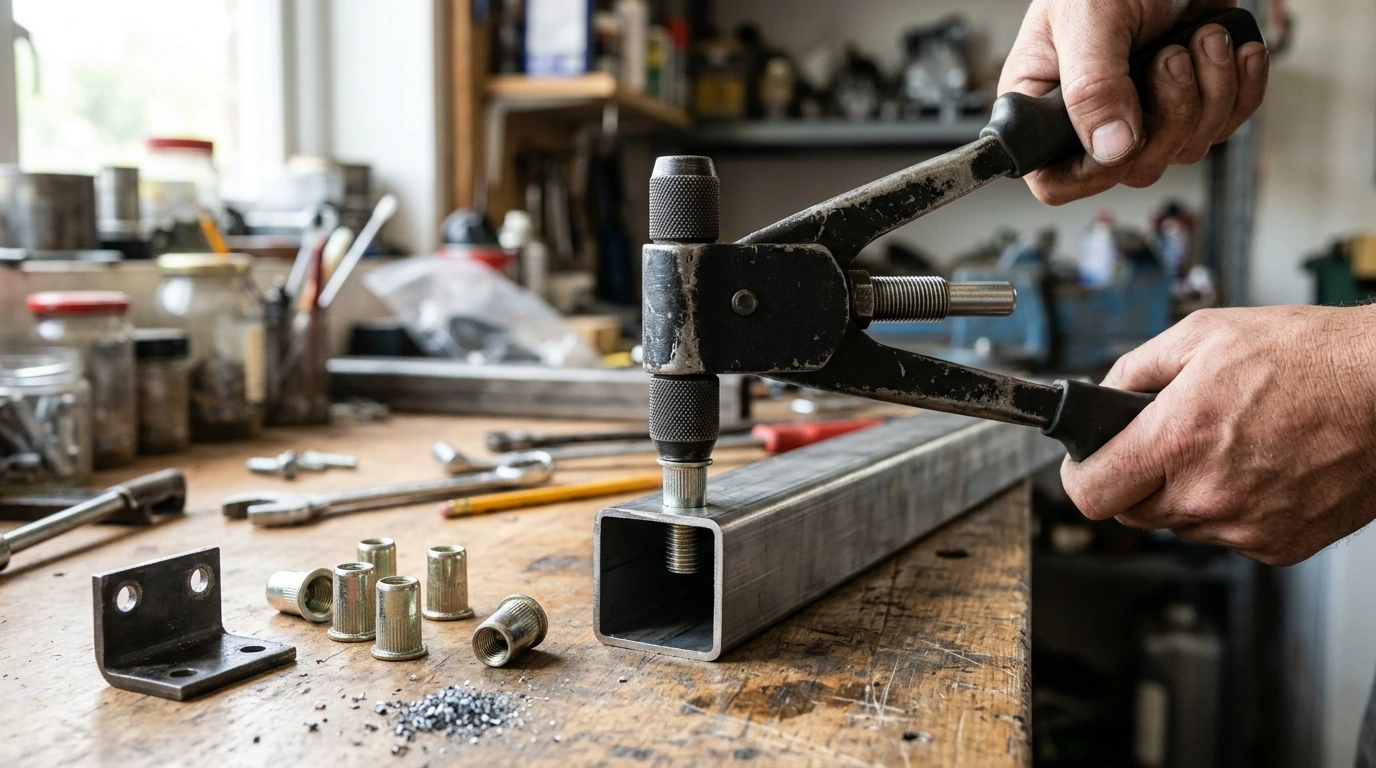
Heavy-Duty Hand Rivet Nut Tool Kit with Rivet Nuts: Strong Threads Where a Regular Nut Won’t Fit
When the back side of a panel is unreachable—or the material is too thin to hold threads—a rivet nut turns sheet metal, tubing, and enclosures into a solid threaded mounting point. Our heavy-duty hand rivet nut tool kit includes 70 rivet nuts so common repairs and installs can start immediately, whether your job is automotive, HVAC, light fabrication, or shop fixtures.
What a rivet nut does (and why it’s different from a rivet)
A rivet nut (also called a nutsert) is a threaded fastener designed for thin or closed-up materials where a standard nut and washer can’t be installed on the back side.
- Creates a reusable internal thread in thin material where tapping threads would strip out.
- Installs from one side only—ideal for body panels, boxed tubing, electrical cabinets, and equipment housings.
- Unlike a pop rivet (permanent), a rivet nut becomes a threaded anchor so bolts can be removed and reinstalled for service.
- Helps standardize fasteners: use common machine screws/bolts instead of self-tapping screws that loosen over time.
If you’ve ever fought a spinning sheet-metal screw or a stripped hole that won’t hold torque, a properly set rivet nut is often the cleanest way back to a dependable, serviceable mount.
Where this heavy-duty hand rivet nut tool kit fits best
Our team recommends a hand rivet nut kit when you want strong threads without needing air tools, cordless tools, or backside access—especially for small-to-medium jobs where control matters.
- Automotive and powersports: mounting light brackets, accessories, skid plates, interior panels, and trim where the rear side can’t be reached.
- Home and shop projects: adding threaded points to metal shelving, tool carts, workbenches, and custom brackets.
- Maintenance and repair: restoring stripped screw holes in thin metal without welding a nut to the back.
- DIY fabrication: prototyping in sheet metal or square tubing while keeping assemblies serviceable.
Common materials and practical setup tips
| Material / surface | Why rivet nuts work well | Install tip for cleaner results |
|---|---|---|
| Thin sheet metal | Adds threads without stripping like self-tappers | Deburr the hole and keep the tool square to prevent spin-out |
| Boxed tubing / closed frames | One-sided installation solves “no access behind” problems | Use a snug hole fit and steady pressure on the handles |
| Painted or coated panels | Reduces need for backside hardware that can scratch coatings | Mask around the hole and remove chips to protect the finish |
| Enclosures and cabinets | Serviceable mounting point for repeated open/close cycles | Tighten bolts to spec; avoid overtightening that can collapse the panel |
What’s included and what it helps solve right away
- A hand-operated rivet nut setting tool designed for controlled leverage on small-to-medium fastening jobs.
- A starter assortment of 70 rivet nuts for immediate installs and quick repairs without hunting for hardware mid-project.
- A practical choice for garages and toolboxes where power tools are not always available or necessary.
- Great for reducing downtime: add threads in minutes instead of redesigning brackets or switching to oversized fasteners.
If you’re ready to add serviceable threads to thin metal, you can find it here: Heavy-Duty Hand Rivet Nut Tool Kit with 70 Rivet Nuts.
Quick-start: installing a rivet nut in 6 clean steps
Avoid the most common rivet nut problems
Safety matters during drilling and chip removal. Eye protection is a baseline requirement for most shop tasks—OSHA’s standard is a good reference: OSHA — Eye and Face Protection (29 CFR 1910.133).
Smart add-ons for a cleaner, stronger install
If you want a deeper overview of rivet nut styles and how they’re designed to clamp, this manufacturer resource is helpful background: AVK Industrial Products — Rivet Nuts (Basics and Types).
Who this kit is ideal for
More in-stock picks from our store
- Heavy-Duty Hand Rivet Nut Tool Kit with 70 Rivet Nuts — a practical starter kit for adding threads fast, with one-sided installation.
- From Dream to Done: The Ultimate Business Goal-Setting Checklist (Printable PDF) — useful when you want to plan shop upgrades, tool purchases, and project milestones without losing track.
FAQ
What’s the difference between a rivet nut and a threaded insert?
A rivet nut is mechanically collapsed from one side so it clamps onto thin material and leaves you with machine threads. Many other threaded inserts are press-fit, heat-set (often for plastics), or require different access and installation methods, so they’re not always ideal for thin sheet metal and closed tubing.
Can a rivet nut be installed in very thin sheet metal?
Yes, as long as the rivet nut’s grip range matches your material thickness and the hole size is correct. Keep the tool square and stop once it’s clamped; if the sheet is extremely thin, a backing plate or washer can help spread the load.
Why does my rivet nut spin after installation?
Most spinning happens when the hole is oversized, the rivet nut isn’t fully set, or the tool was angled during installation. The fix is usually correcting the hole size and technique; if the hole is wallowed out, moving to a fresh hole or stepping up to the proper fit can restore a solid hold.















Leave a comment