Sleek Geometric Ceramic Foaming Soap Dispenser (Refillable)
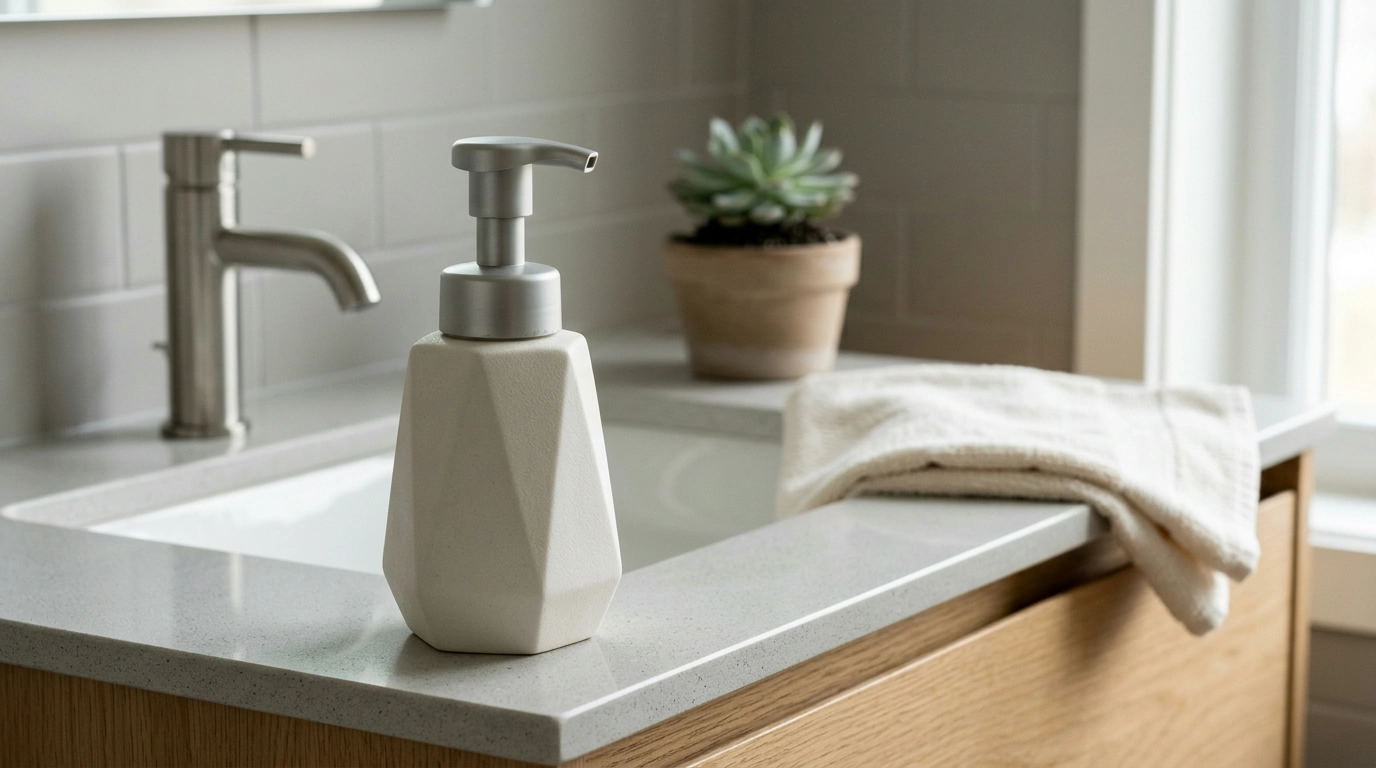
Geometric Ceramic Foam Bottle Refillable Lotion & Soap Dispenser
A countertop dispenser should look intentional, feel solid, and make everyday routines easier. The Geometric Ceramic Foam Bottle Refillable Lotion & Soap Dispenser is designed to elevate sinks and vanities with a clean, modern silhouette while keeping soap or lotion convenient, refillable, and less cluttered than disposable bottles. With a ceramic body and a foaming-style pump, it’s a simple switch that can make handwashing feel more streamlined—and your counter look noticeably more pulled together.
What makes this dispenser different
- Geometric ceramic body: The structured shape adds a modern accent that works with minimalist, contemporary, and spa-inspired spaces.
- Refillable, less wasteful routine: Refilling helps cut down on the parade of single-use plastic bottles around the sink.
- Foaming-style pump experience: When paired with a foaming-compatible soap, the pump can deliver a lighter foam that spreads easily across hands.
- Weighted, steady feel: Ceramic brings a grounded, stable presence—especially helpful when hands are wet and you’re pumping quickly.
- Easy to coordinate: Works well as a tidy, intentional piece for guest bathrooms, powder rooms, and kitchen sinks.
Best places to use it
- Bathroom vanity: Keeps hand soap, a foaming-friendly facial cleanser (if compatible), or a lighter lotion option within reach without visual clutter.
- Kitchen sink: A neat hand-soap solution near food-prep areas; many people keep it separate from dish soap to avoid mix-ups.
- Guest bath: One attractive dispenser signals a clean, thoughtful setup for visitors—no half-used plastic bottle needed.
- Laundry or utility sink: Convenient for quick handwashing after chores, gardening, or cleaning projects.
- Office or studio sink: Adds polish to a functional space and encourages regular handwashing throughout the day.
For a quick refresher on effective handwashing habits, the CDC’s guidance is a helpful benchmark: When and How to Wash Your Hands.
How to fill and use a foaming pump
Foaming pumps are simple, but they’re more sensitive to product thickness and buildup than standard lotion pumps. A few small steps can keep the foam consistent and the pump working smoothly.
- Start clean: If you’re switching products, wash out the bottle and rinse the pump. Old residue can disrupt foam texture.
- Choose a compatible formula: Foaming hand soap performs best. If using regular liquid hand soap, dilution may be needed—avoid thick lotions in foaming mechanisms unless they’re specifically designed for foaming pumps.
- Add soap first, then water (if diluting): This helps reduce excessive bubbles while you’re mixing.
- Swirl gently: A gentle swirl combines the mixture; vigorous shaking can create foam inside the bottle and throw off the first few pumps.
- Tweak if needed: If output is watery or inconsistent, adjust the soap-to-water balance or switch to a foaming-compatible product.
Quick compatibility guide
| What you want to dispense | Works best with a foaming pump? | Notes |
|---|---|---|
| Foaming hand soap | Yes | Most consistent foam and easiest pumping |
| Regular liquid hand soap (diluted if needed) | Often | Performance depends on thickness and ingredients |
| Dish soap | Sometimes | May require dilution; can be drying for frequent handwashing |
| Body wash / shower gel | Sometimes | Some formulas foam well; others are too thick |
| Lotion / thick creams | No | Typically better in a standard lotion pump, not a foaming pump |
If you’re setting up a high-traffic sink (kitchen, office, studio), it can also help to keep hand hygiene straightforward. The FDA shares ongoing consumer updates about hand hygiene and related products here: Consumer Updates on Hand Sanitizers and Hand Hygiene.
Care tips for ceramic and the pump
- Wipe, don’t scrub: Use a soft, damp cloth on the ceramic exterior, then dry it to keep the finish crisp.
- Stay ahead of drips: Clean around the pump collar promptly to prevent sticky buildup.
- Deep clean occasionally: Empty the dispenser, rinse the bottle, and run warm water through the pump by pressing it until the water runs clear.
- Avoid abrasives: Skip harsh scrubbers that can dull the ceramic surface over time.
- Choose a stable spot: A dry, level placement helps prevent water rings and reduces slipping on glossy countertops.
Styling ideas for a coordinated sink setup
- Create a “set” with a tray: A small tray helps catch drips and visually groups the dispenser with a toothbrush cup or a small plant.
- Pick one hardware finish: Matching nearby accents (black, chrome, brass) keeps the overall look cohesive.
- Let the shape do the work: Use neutral towels and keep the counter simple so the geometric design stands out.
- Make it guest-ready: Add a small bowl for rings or a neatly folded washcloth for an easy, welcoming touch.
- Reduce kitchen scatter: Place it beside a slim brush holder or sponge caddy to keep the sink zone tidy.
When it’s time to replace or refresh
In-stock picks to support a tidier routine
- Geometric Ceramic Foam Bottle Refillable Lotion & Soap Dispenser (refillable countertop dispenser for soap or foaming-compatible mixes)
- Smart Moves: Save Money & Pay Bills Like a Pro – Your Ultimate Guide to Financial Freedom (a practical guide that pairs well with home reset goals)
- From Dream to Done: The Ultimate Business Goal-Setting Checklist (a printable checklist for keeping projects and routines on track)
FAQ
Can regular liquid hand soap be used in a foaming dispenser?
Often yes, but it may need dilution and results depend on how thick the soap is. If the foam seems weak or watery, adjust the mix or switch to a foaming-compatible soap for more consistent output.
How is a ceramic dispenser best cleaned?
Wipe the ceramic with a soft damp cloth and dry it; avoid abrasive scrubbers. For the pump, rinse with warm water and pump clean water through until it runs clear to remove residue.
Why does the pump stop foaming properly?
Common causes include product buildup, using a formula that’s too thick, incorrect dilution, or an air leak at the collar. A thorough rinse and switching to a foaming-friendly soap usually restores performance.













Leave a comment